After finishing school Neville worked at the Kaptagat School as Housekeeper, living at home and earning £15 a month. I joined her for a year as Assistant Kindergarten teacher to Kitty Knight and was paid £10 a month and, in addition to my teaching duties, I taught games on some days, took ‘rest time’ in the afternoon and put the children to bed and switched out lights at 7.30. Looking back I think the school did pretty well out of us! We were quite content and of course I lived with Neville at her home. The following year I went in to Eldoret to work for my father. I had done a Secretarial Course in Nairobi during my last year of schooling at the Kenya Girls High School. Neville and I both had several boy friends. Many of hers obviously wanted to marry her but I don’t think she ever so much as held hands so they never came to the point of proposal. However, Simon Rowan appeared on the scene. He was working for the Fosters in Uganda at the Cotton Ginneries. He managed to sweep her off her feet and she was married at Kaptagat Farm.
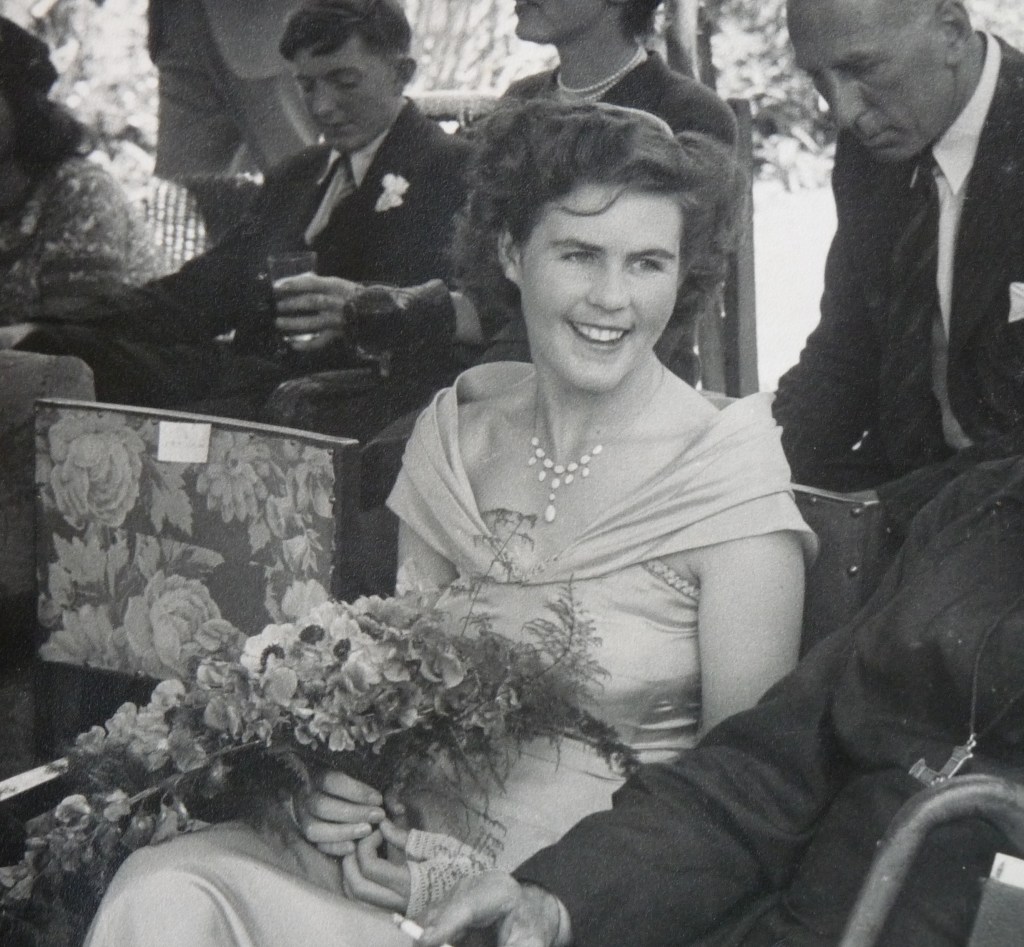
As one of Neville and Simon’s bridesmaids. Robert Foster immediately behind to my left.
The service was held on the front lawn with Lydia Royston, Mary and I as her bridesmaids. She went to live with him in Uganda where, I think, Heather was born. My father and I went to stay with them for a very memorable weekend.

Between 1952 and 1960 there was what became known as the Mau Mau uprising. During much of this time my family and the Fosters all lived in what was known as the White Highlands. It concerned the Kikuyu tribe who were bright and intelligent and wanted to be in the places of power. The Colonial government were trying to educate and assist the African people to eventually take over their own country but of course the pace was far too slow. Robert and Francis joined something called the Mounted Police I think and spent their time chasing and hunting down gangs of Kikuyu who had been recruited into the Mau Mau. Many of them had been loyal employees who had been forced to take the Mau Mau oaths which involved all sorts of revolting and dehumanisisng behaviour that made it impossible for them to continue as domestic servants and also to be used in the killing of their previous employers. Husbands would carry firearms at all times, in the bathroom and the diningroom and by their bedsides at night. There were several instances of attackers entering the premises by holding a gun to the back of a house servant carrying in the evening meal. A family near Nairobi was butchered and the pregnant mother had the unborn child cut out of her belly while she was still alive and it’s feet stuffed down her throat. A friend of mine was alone on the farm when she heard a gardener shout out that the Mau Mau were coming. All the servants fled and she hid in the wardrobe but was discovered. However, she managed to bargain with intruders and pay them a lot of money and promised to tell no one of the raid. They left her alive and she immediately telephoned the police and was taken to safety. Another good friend who was married to a farmer in this area had a nervous breakdown from the constant strain. She went to stay with her sister in Uganda but was later found to have walked out in her nightdress one night and hanged herself from a tree. We lived out of danger but were constantly hearing these dreadful stories. It was never certain that this evil might spread to our area. The Kikuyu were hated by many other tribes. A farming friend of ours who lived in the Nandi Hills had many Kikuyu working for him. However, he called together all his Luo and Nandi employees and told them that if ever they heard him beat this gong (a large ploughshare hanging between posts) they were to arm themselves and go down and slaughter the Kikuyu. So far as I know the need never arose.
 Best Beloved